What to Wear to an Outdoor Screening When It Is 75°F at Sunset and 55°F by the Credits

Quick Answer: Outdoor screenings drop 15 to 20°F between start and finish, and sitting still makes it feel colder still. The formula is a fitted base layer, a mid-layer you put on at sunset rather than wearing from the start, closed shoes with real socks, and something that covers your legs from below — a blanket rather than more clothing. Dressing for the temperature when you arrive is the mistake everyone makes once.
You arrive comfortable in a t-shirt. Ninety minutes later you are watching the film through your own goosebumps.
The temperature drop is predictable, which means it is entirely solvable.
Why does it get so much colder than the forecast suggests?
Three effects stack, and only one of them is air temperature.
Radiational cooling after sunset is fast. On a clear night, ground temperature drops quickly once the sun is down, and open fields and parking lots cool faster than built-up areas. A 15 to 20 degree drop between 7pm and 10pm is routine in late summer and early fall.
Sitting still produces almost no heat. Your metabolic rate seated is a fraction of what it is walking. The same temperature that felt pleasant while you were walking to your seat feels genuinely cold twenty minutes into sitting.
Damp ground and grass pull heat from below. Conduction through a thin blanket into cool ground is a substantial and often unrecognized heat loss route.
Air movement finishes the job. Even a slight breeze across an open field strips the thin warm layer next to your skin, which is why an open venue feels much colder than a sheltered one at the same reading.
The forecast low is also usually for a later hour than when the film ends, so the number you checked is not the number you will experience — it is usually worse than the 10pm reading suggests.
What should the actual layers be?
Four elements, and the timing of when you put them on matters as much as what they are.
A fitted base you wear the whole time. Long-sleeve or short-sleeve depending on the arrival temperature, but fitted — a loose base layer lets air circulate against your skin, which is the last thing you want once you are sitting.
A mid-layer you carry and add at sunset. A fleece, a chunky cardigan, or a quilted shirt jacket. Put it on before you feel cold. Adding a layer once you are already cold takes far longer to recover from because you are heating both yourself and the layer.
Closed shoes and real socks. Feet lose heat fast and they are the hardest thing to warm back up. Sandals are the single most regretted choice at an outdoor screening.
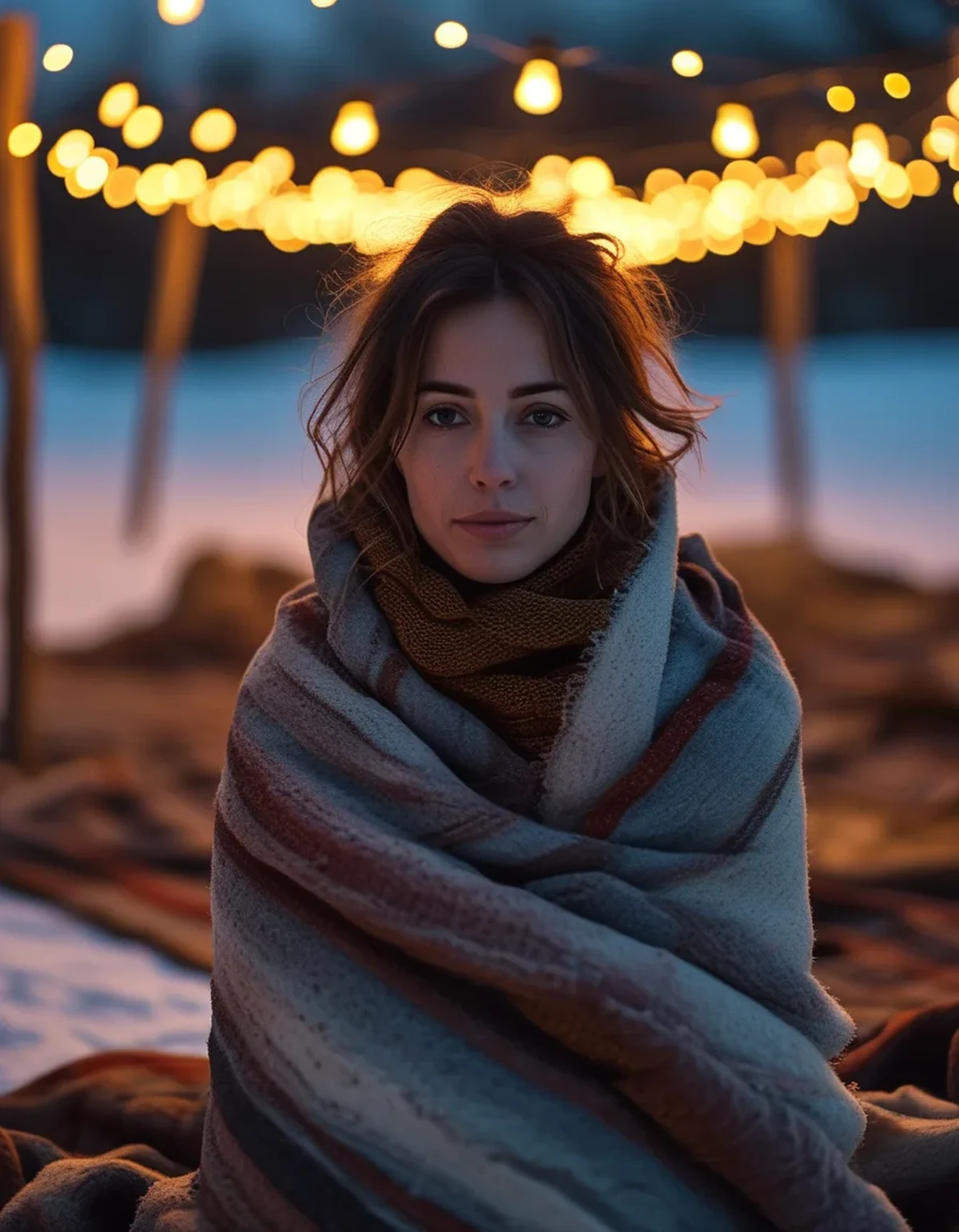
A blanket for your legs and a second one to sit on. The one underneath you matters more than most people expect, because it blocks conduction into cold ground. Two thin blankets beat one thick one for this reason.
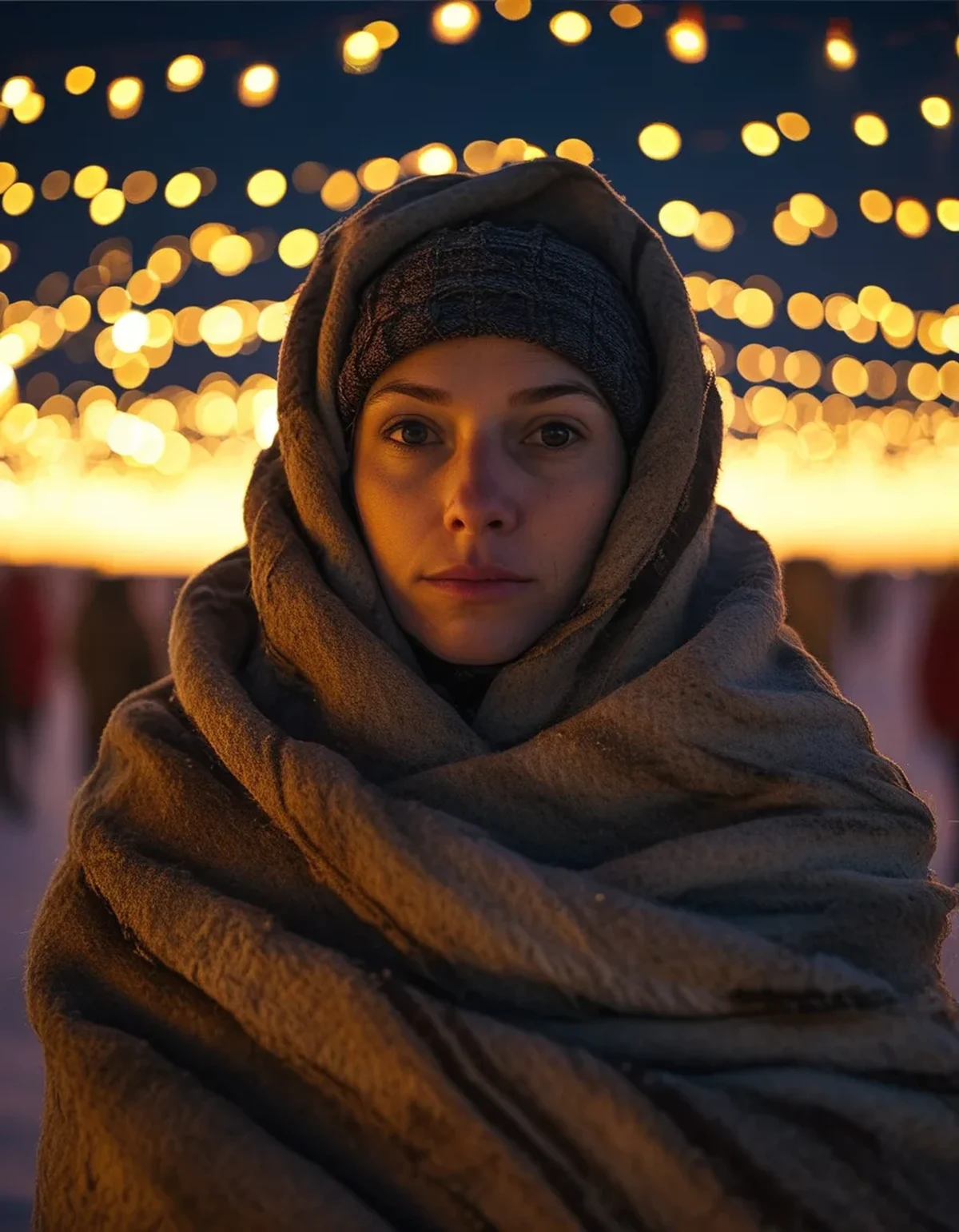
And a hat if it is October. Not for style — it is genuinely the fastest way to change how warm you feel when you cannot move around.
What Nobody Tells You About Sitting Still Outdoors
The details that separate a comfortable night from a miserable one are rarely about clothing weight.
Add the layer at sunset, not at the shiver. Your body loses heat gradually and you notice it suddenly. By the time you feel cold you have already lost the buffer, and a layer added then takes twenty minutes to feel like anything.
Wide leg openings are a cold-air channel. Loose trousers and wide-leg jeans let air circulate up the leg every time you shift. Something with a closer ankle, or tucking into a boot, makes a bigger difference than another top would.
Eat something warm or drink something hot at the halfway point. A warm drink raises perceived warmth immediately, and having something to do with your hands helps more than it should.
Bring one more layer than you think you need, and leave it in the car. The cost is zero and the benefit on the one night the forecast is wrong is enormous.
Watch out for the ground being wet before the air is. Dew forms on grass well before the air feels damp, so a blanket laid down at 7pm can be noticeably wet by 9pm. A waterproof-backed picnic blanket underneath solves it — and this is the detail almost nobody accounts for until the second time.
Does it look good, or is it purely practical?
Both, if you choose the layers for shape as well as warmth.
A fitted base under an open mid-layer is the same formula that works everywhere else. Two vertical lines down the front, shape from the base layer, warmth from the outer.
Pick a mid-layer you would wear on its own. A good quilted shirt jacket or an oversized cardigan photographs well, which matters at an event people take photos at.
Boots over sneakers for October screenings. Warmer, and they solve the wide-ankle problem while looking more deliberate than a sneaker-and-sock combination.
A blanket that is not a bedspread. A wool throw or a proper picnic blanket reads as part of the outfit rather than as something you grabbed from the couch — and this is a low-effort upgrade for something that will be in every photo.
Late-summer versus fall: an August screening genuinely only needs the cardigan. By late September you want the fleece, the socks, and both blankets. The transition happens faster than most people update their packing for, usually around the third week of September.
FAQ: Outdoor Screening Questions, Answered
How much colder does it actually get during a two-hour film?
In late summer and early fall, expect 15 to 20°F between a 7:30pm start and a 9:30pm finish on a clear night, with the steepest drop in the first hour after sunset. Cloud cover reduces it substantially — an overcast night might only drop 8 to 10°F, because clouds trap radiated heat.
Is a blanket enough, or do I need the extra layer too?
Both, and they do different jobs. The blanket covers your legs and blocks ground conduction; the mid-layer keeps your core warm, which is what determines whether your hands and feet get blood flow. A blanket over a t-shirt leaves your core under-insulated, and cold hands follow within the hour.
What about a drive-in specifically?
Slightly easier, since the car is a windbreak and you can run the heater between features. The trap is people underdress because the car feels warm on arrival — the engine is off for two hours and a car cools quickly. Pack as though you were sitting in a field, then enjoy not needing all of it.
TL;DR:
- Expect a 15 to 20°F drop on a clear night; sitting still makes it feel colder than the number suggests.
- Fitted base, a mid-layer added at sunset before you feel cold, closed shoes with socks, two blankets.
- The blanket underneath you matters as much as the one over you — cold ground pulls heat continuously.
- Narrow ankles beat wide legs, and a hat is the fastest warmth upgrade available when you cannot move. Pack the extra layer and leave it in the car. It costs nothing on the warm nights and it saves the one night the forecast is wrong.
See It in Motion
Seen here: High Waist Wide Leg Yoga Pants with Pockets — shop it on bubblelime.com
Keep Reading
This article is for general informational and styling purposes only. Fit, sizing, and product availability may vary.