The Movie Night Outfit Formula for a Theater That's Always Too Cold

Quick Answer: Movie theaters are kept cold enough to offset a full house of body heat and equipment, which means dressing for the walk in (mild outdoor temperature) rather than the two-plus hours sitting still indoors is why so many movie night outfits end up uncomfortable — a light base layer plus one substantial, easy-to-remove outer layer solves it.
It’s warm walking to the theater, then genuinely cold ten minutes into the movie. Dressing for one moment instead of the other is the actual outfit mistake most people make on movie night.
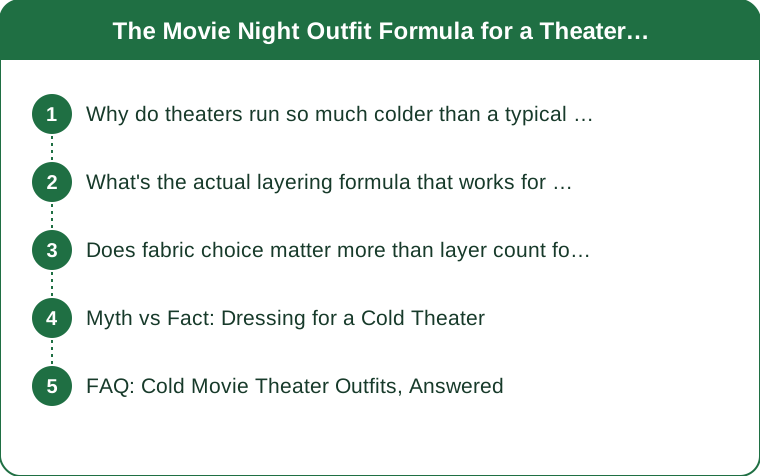
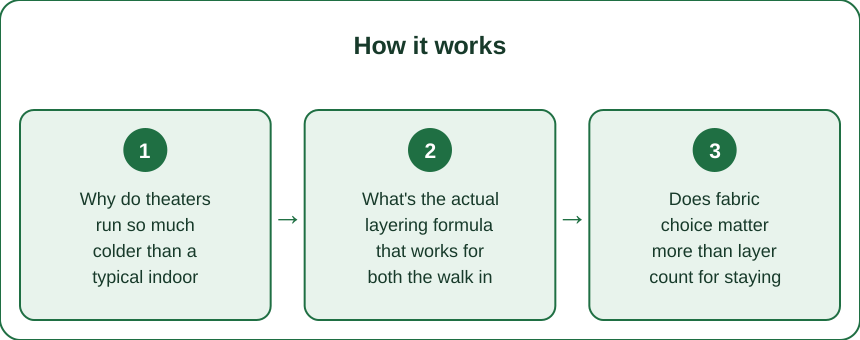
Why do theaters run so much colder than a typical indoor space?
Theaters are cooled partly to offset the body heat of a full house over a two-plus hour sitting period, and partly because equipment (projectors, sound systems) generates heat that needs active cooling — the combined effect is a room temperature that’s noticeably cooler than a typical restaurant or store, even though it might feel like an overcorrection when the theater is only half full.
What’s the actual layering formula that works for both the walk in and the sitting-still cold?
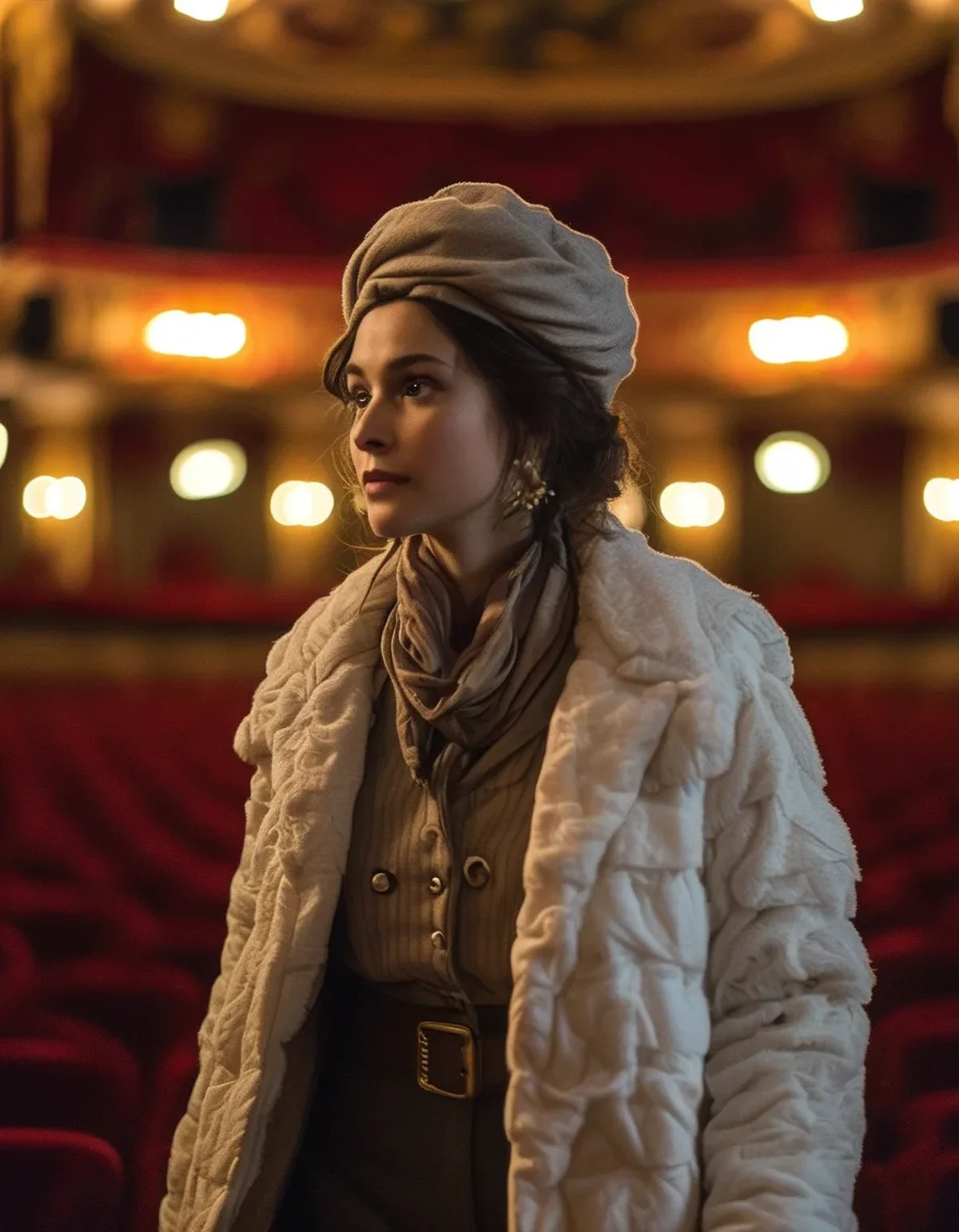
A lightweight base layer (a fitted long-sleeve or light sweater) handles the mild outdoor walk without overheating, paired with one substantial outer layer — a cardigan, a light puffer, or a flannel — that can go on once seated and stay on for the duration without needing removal. The key is choosing an outer layer substantial enough to actually offset theater cold, not just a thin cardigan that looks the part but doesn’t add real warmth.

Does fabric choice matter more than layer count for staying warm while seated still?
Somewhat, yes — a heavier knit or fleece-lined layer traps warmth more effectively during a long stationary period than a thin woven layer, even if the thin layer looks bulkier. For a movie specifically (extended sitting, not moving around), a warmer fabric in a single outer layer often outperforms two thin layers stacked together.
Myth vs Fact: Dressing for a Cold Theater
Myth: Any cardigan or light jacket is enough for a movie theater’s air conditioning. Fact: Theater temperatures are often cold enough that a genuinely warm outer layer (not just a thin, decorative one) is needed to stay comfortable through a full film.
Myth: Dressing warm for the theater means overheating on the walk there. Fact: A light base layer plus a substantial but removable-feeling outer layer (like an open cardigan or unzipped jacket) handles both temperature extremes without needing two separate outfits.
FAQ: Cold Movie Theater Outfits, Answered
Is it acceptable to bring a blanket or scarf specifically for a theater?
Yes — a packable scarf or small blanket is a common, practical solution for particularly cold theaters and takes up little space, especially useful for longer films or if you run cold more than average.
Does seat location in the theater affect how cold it feels?
Some people report seats directly under an AC vent feeling noticeably colder, so choosing a seat away from visible overhead vents when possible can reduce how much extra layering is needed.
What’s a reasonable outfit for a summer movie night specifically, when it’s very warm outside?
A light breathable base layer for the walk over, paired with a packable, warmer layer (a fleece or knit cardigan) stashed in a bag rather than worn the whole time, handles the temperature swing between a hot outdoor evening and a cold theater interior.
TL;DR:
- Theaters run cold to offset body heat from a full house and equipment heat output
- Layer a light base for the walk in with one substantial, warm outer layer for sitting still
- Fabric weight (fleece-lined, heavier knit) matters more than layer count for staying warm seated
- A packable scarf or blanket is a reasonable backup for particularly cold theaters
Dressing for both temperature extremes in one outfit means you’re not shivering by the second act or sweating in the lobby beforehand.
Keep Reading
This article is for general informational and styling purposes only. Fit, sizing, and product availability may vary.